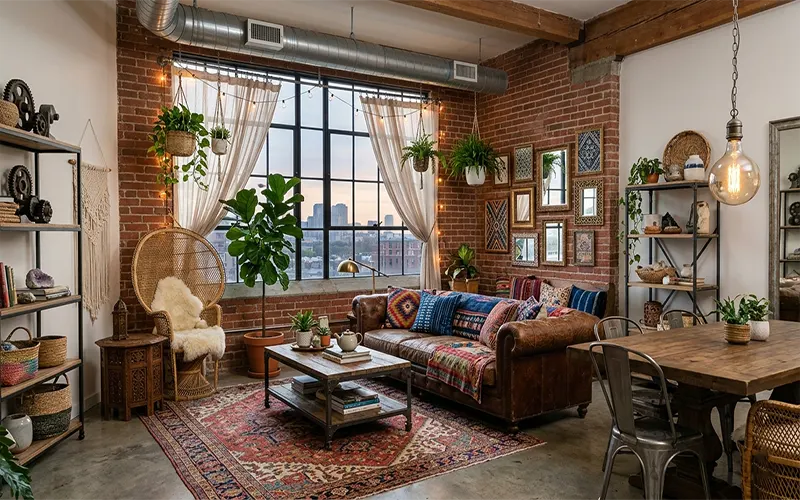
Interior design is often treated as a search for a single, unified aesthetic, but the most compelling homes are rarely found within the confines of one “rulebook.” One of the most dynamic design combinations emerging today is the synthesis of Industrial and Bohemian styles. At first glance, they seem like opposites: Industrial is defined by cold metal, rigid lines, and raw, unfinished surfaces, while Bohemianism celebrates fluidity, warmth, maximalist patterns, and artisanal soul.
However, it is precisely this tension that makes the “Boho-Industrial” aesthetic work. By pairing the sharp, structural edge of an industrial loft with the soft, inviting layers of a nomad’s haven, you create a space that feels both grounded and spirited—a home that is structured, yet deeply personal.
The Design Philosophy: Finding the Balance
The secret to blending these two styles lies in a “Hard vs. Soft” framework. Industrial elements act as your skeleton, while Bohemian pieces provide the heartbeat.
The Foundation: The Industrial Skeleton
Industrial design finds beauty in the utility of a building. To set your stage, lean into the architecture of your home:
- Raw Materials: Embrace exposed brick, concrete flooring, or raw wood beams. If you don’t have these architectural features, mimic them with textures—think faux-brick wallpaper or a large concrete-top coffee table.
- Metallics and Pipes: Use matte black metal or distressed iron for light fixtures, curtain rods, and shelving units. These dark, linear elements provide the visual “anchors” that prevent a Bohemian space from feeling too chaotic or cluttered.
- Factory Windows: Large, thin-framed black metal mirrors can replicate the look of warehouse windows, instantly grounding the space in industrial history.
The Softening: The Bohemian Soul
Once the industrial skeleton is in place, you must “warm up” the space. This is where the Bohemian aesthetic takes over, serving as a buffer against the coolness of steel and concrete.
- Textile Layering: This is non-negotiable. Layer rugs of varying patterns—a vintage Persian-style rug placed over a neutral jute base adds immediate depth.
- Global Influences: Incorporate artisanal accents like Moroccan poufs, kantha quilts, or macramé wall hangings. These pieces carry the “lived-in” narrative that Industrial design lacks.
- The Urban Jungle: Industrial lofts can feel sterile; Bohemian design thrives on life. Use oversized floor plants like Fiddle Leaf Figs or cascading Pothos to blur the lines between the indoor architecture and the natural world.
Furniture Balancing: A Dialogue of Contrasts
The most successful Boho-Industrial rooms rely on deliberate furniture choices that act as mediators between the two styles.
- The Hero Piece: If you have an industrial-style dining table made of reclaimed wood and iron, do not pair it with matching metal chairs. Instead, use velvet-upholstered chairs in jewel tones or woven rattan chairs. The contrast between the rigid, heavy table and the soft, organic seating is what creates the “design magic.”
- The “Found” Object: Bohemianism is built on the collection of artifacts. Place your curated thrift-store finds, global trinkets, or stack of vintage books on an industrial-style metal pipe bookshelf. The pairing makes the objects look like treasures displayed in a museum of modern living.
The Palette: Bridging the Gap
To ensure the styles don’t fight one another, use a color bridge.
- The Industrial Backdrop: Use the cool, neutral tones of Industrialism—charcoal, slate grey, and weathered white—as your wall color.
- The Bohemian Accents: Use the warm, earthy tones of Bohemianism—terracotta, mustard, burnt orange, and deep olive—as your “pop” colors. These warm hues pop beautifully against the cool, dark metallic and concrete surfaces, creating a vibrant yet sophisticated environment.
Styling & Accessories: The Finishing Touches
Lighting and small accessories are where you can get creative with the “clash.”
- Lighting Juxtaposition: For a bold statement, hang a beaded, tasseled chandelier in a room that features an exposed iron light fixture or track lighting. It creates an unexpected focal point that highlights both your industrial grit and your bohemian flair.
- Manage the Scale: Industrial design is inherently minimalist, while Bohemian design is inherently maximalist. To keep your home from feeling overwhelming, focus your maximalist energy on textiles rather than objects. Keep surfaces relatively clear to honor the industrial roots of the architecture, but let the floor, the walls, and the seating explode with color and pattern.
The Art of the Curated Clash
Blending Bohemian and Industrial styles is ultimately a practice of storytelling. You are taking the structural, honest materials of the modern world and softening them with the colors, textures, and histories of the global traveler. The result is a space that doesn’t just look like a catalog spread—it looks like a home that has been lived in, traveled through, and thoughtfully curated over time. By respecting the cold, hard lines of the industrial and the warm, wild heart of the bohemian, you create a sanctuary that is as comfortable as it is cool.