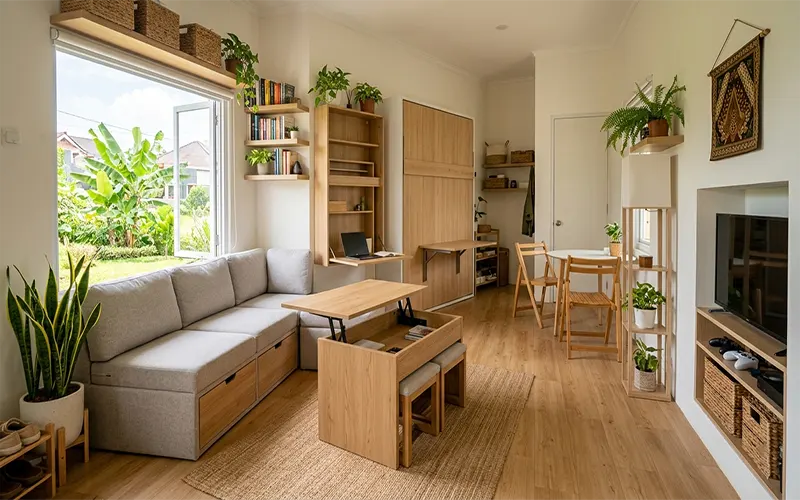
Designing a small living room is an exercise in intentionality. When square footage is at a premium, every piece of furniture must earn its place by offering either exceptional utility, significant comfort, or—ideally—both. In 2026, the shift in small-space design is moving toward “invisible” intelligence, where furniture not only saves space but actively enhances the lifestyle of those who live in compact environments.
Whether you are in a studio apartment or a cozy family home, here is how to master the art of the small-space layout through smarter furniture choices.
The Philosophy of Multifunctional Living
The golden rule of small-house living is simple: if a piece of furniture does only one thing, it might be the wrong piece. Modern multifunctional furniture is designed to adapt to your daily rhythm, transitioning from a workspace to a relaxation lounge to a guest suite within seconds.
1. The Power of “Hidden” Storage
Clutter is the primary enemy of a small living room. Furniture that integrates storage allows you to maintain a minimalist aesthetic without sacrificing your belongings.
- Storage Ottomans: These are the ultimate utility players. Use them as a footrest, extra seating when guests arrive, or as a coffee table with a tray on top. When the day is done, hide blankets, remotes, or toys inside to reclaim your floor space.
- Sofa-Integrated Storage: Look for sectionals or loveseats with built-in storage compartments under the seats or inside the armrests. This is prime “hidden” space perfect for items you need daily but don’t want on display.
- Media Consoles with Closed Cabinets: Open shelving often leads to visual noise. Opt for media consoles with doors to conceal consoles, cables, and charging stations, keeping the “visual weight” of the room light and airy.
2. Transformative Seating and Sleeping
For those who host frequently but lack a dedicated guest room, the living room must evolve.
- Modular Sofas: Modular designs allow you to rearrange your seating to fit your room’s specific shape rather than forcing you into a standard L-shape or straight-line configuration.
- Daybeds and Sleeper Sofas: Modern sleeper sofas have shed their reputation for being bulky or uncomfortable. Today’s models offer slim, sleek profiles that fold out into high-quality beds, making them perfect for compact urban living.
- Nesting and Stacking Furniture: If you need extra surface area for entertaining but don’t want to lose your floor space, nesting coffee tables or stackable stools are essential. They disappear when not in use and emerge only when you have company.
3. Vertical Thinking: Wall-Mounted and Low-Profile Designs
One of the most common mistakes in small living rooms is selecting furniture that creates a “heavy” horizon line.
- Floating Tables and Shelves: By mounting tables, desks, or shelving directly to the wall, you keep the floor visible. A clear floor helps the eye perceive more space, making the room feel larger.
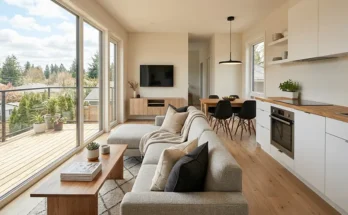
- Low-Profile Media Units: Low-slung consoles draw the eye downward, making ceilings feel higher. Pairing these with a wall-mounted TV clears up valuable surface area on top of the console.
- Leggy Furniture: Choose sofas and armchairs that stand on exposed legs. Seeing the floor underneath a piece of furniture makes the room feel significantly more open than pieces that sit flush to the floor.
Designing for Flow: Pro-Tips for Small Layouts
Beyond selecting the right pieces, how you arrange them determines the “liveability” of your home.
- Prioritize Walkways: No matter how beautiful your furniture is, if you’re bumping into it, the room isn’t working. Aim for at least 24 to 30 inches of clear walkway between major pieces. Use painter’s tape to map out your layout on the floor before making a purchase.
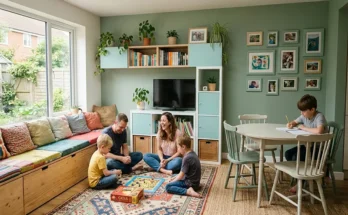
- Zoning with Rugs: In open-plan homes, use a large area rug to anchor the living space. This visually separates your “living zone” from your dining or work zone without the need for physical barriers that block light and flow.
- Mirrors and Reflection: Place a large mirror opposite a window or a main light source. This simple trick bounces light around the room, creating an illusion of depth that effectively “pushes” the walls outward.
- Consistency is Key: A cohesive color palette—think light grays, warm whites, or soft beiges—prevents the room from feeling fragmented. When your walls, furniture, and curtains share a color story, the boundaries of the room seem to blur.
The 2026 Shift: Tech-Integrated Versatility
As we move further into 2026, we are seeing the rise of “smart” furniture. Think coffee tables with built-in wireless charging stations, side tables with integrated Bluetooth speakers, or media consoles that manage cable clutter through intelligent ventilation. These pieces reduce the need for extra gadgets and cords, which are notorious for making small rooms look messy.
Small-house living does not have to be a compromise. By selecting furniture that “pulls double shifts”—a coffee table that stores your books, a sofa that sleeps your guests, or a media console that keeps your tech organized—you create a home that is as efficient as it is beautiful. Remember, the best small-room design isn’t about fitting more in; it’s about curating a space where everything serves a purpose, allowing you to live large in a smaller footprint.