Minimalism is often unfairly labeled as cold or sterile, but in the world of interior design, two styles have consistently proven that simplicity is the gateway to profound comfort: Scandinavian and Japandi. At a glance, they may appear interchangeable. Both prioritize clean lines, functional spaces, and a deep respect for natural materials. However, beneath the surface, they are driven by vastly different philosophies. Understanding these nuances is the key to creating a home that doesn’t just look curated, but feels emotionally resonant.
Philosophical Roots: Hygge vs. Wabi-Sabi
To understand the difference between the two, we must look at their origins.
Scandinavian Design is a response to the harsh, dark Nordic winters. It is defined by hygge—a concept that centers on coziness, contentment, and the necessity of creating a warm sanctuary against the elements. It is an aesthetic of optimism, designed to maximize natural light and ensure that every piece of furniture feels inviting and approachable.
Japandi, by contrast, is a hybrid aesthetic that marries Scandinavian functionality with the Japanese philosophy of wabi-sabi. Wabi-sabi is the art of finding beauty in imperfection, transience, and the natural cycle of growth and decay. While Scandinavian design seeks to “fix” the gloom of winter with brightness, Japandi seeks to embrace the quiet, grounded beauty of the natural world, regardless of the season.
Key Distinctions: A Side-by-Side Comparison
While they share a minimalist DNA, their execution varies across three primary domains: color, material, and form.
1. The Color Palette
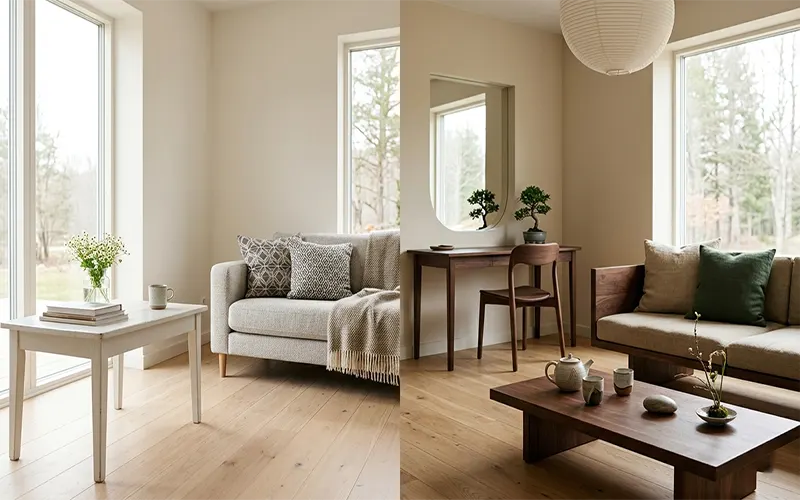
- Scandinavian: The palette is intentionally bright. It relies on a “blank canvas” approach: crisp whites, pale greys, and cream tones, often punctuated by soft pastels like blush pink or muted sage. The goal is to reflect light and expand the sense of space.
- Japandi: The palette is deeper, moodier, and earthier. Think charcoal, dark stained wood, terracotta, warm oatmeal, and forest green. Japandi isn’t afraid of contrast; it uses dark, grounded tones to create a sense of cocoon-like intimacy.
2. Materials and Textures
- Scandinavian: You will find light, blonde woods such as ash, pine, and white oak. The textiles are soft and cozy: heavy-knit wool blankets, sheepskins, and linen curtains that diffuse sunlight. It is a “tactile” comfort that screams “curl up and stay a while.”
- Japandi: The focus shifts toward tactile, raw elements. Expect darker woods like walnut or stained oak, paired with artisanal ceramics, stone, raw bamboo, and paper. Textures here are more varied and often highlight the “imperfections” of the material—such as the grain of the wood or the hand-thrown shape of a vase.
3. Furniture and Form
- Scandinavian: Furniture is designed for ergonomic comfort and “friendly” aesthetics. Lines are clean but often incorporate gentle curves and rounded edges. It feels practical, durable, and family-friendly.
- Japandi: Furniture is decidedly sculptural and low-profile. Inspired by traditional Japanese design, pieces often sit closer to the ground. The forms are more linear and restrained, leaning into a meditative, “less is more” mindset where the object itself acts as a piece of art.
Quick Comparison Summary
| Feature | Scandinavian | Japandi |
| Philosophy | Hygge (Cozy comfort) | Wabi-Sabi (Grounded imperfection) |
| Color Base | Bright whites/pastels | Earthy neutrals/dark accents |
| Wood Tone | Light/Blonde (Ash, Pine) | Dark/Stained (Walnut, Oak) |
| Mood | Cheerful, Airy, Cozy | Meditative, Refined, Earthy |
Choosing Your Aesthetic
How do you decide which path to take?
- Choose Scandinavian if: You live in a space that lacks natural light, or if you prefer a home that feels cheerful, social, and “soft.” It is the perfect choice for families who want a clean aesthetic that doesn’t feel fragile.
- Choose Japandi if: You crave a home that feels like a quiet retreat from the chaos of modern life. If you love the idea of “slow living” and prefer a space that feels grounded, moody, and highly curated, Japandi is your ideal aesthetic.
The Best of Both Worlds
The beauty of modern design is that you don’t have to pick a side. In fact, many designers now blend the two, using the light, bright, and cozy foundations of Scandinavian design as the “bones” of a room, and layering in the moody, sculptural, and imperfect artifacts of Japandi to give the space soul.
Whether you lean toward the bright cheer of the Nordic winter or the grounded, meditative silence of Japanese minimalism, both styles ultimately strive for the same thing: a home stripped of excess, where the objects we choose and the space we create serve to clear the mind and nurture the spirit.