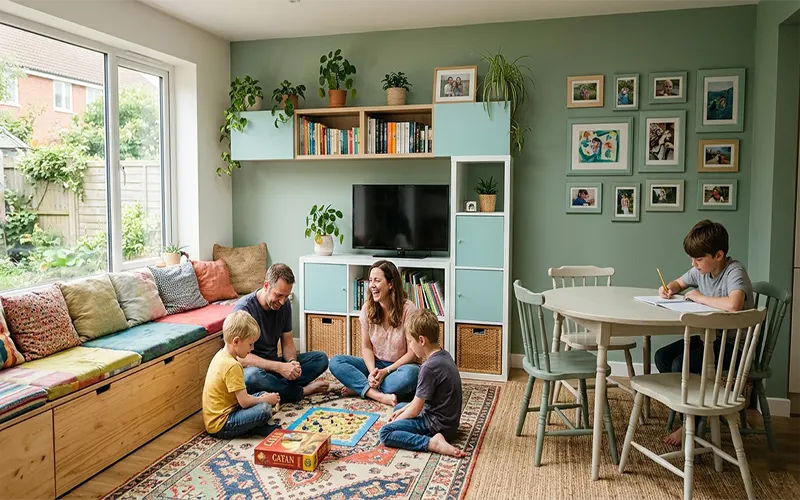
Living in a small home with a family can often feel like a constant battle between your desire for a curated, peaceful space and the inevitable reality of toys, clothes, and school gear. However, a limited footprint doesn’t mean you have to sacrifice style or functionality. With a bit of creativity and strategic planning, you can transform your home into a durable, organized, and beautiful sanctuary without breaking the bank.
Designing a small family home is not about buying more—it is about making what you have work harder. Here are the most effective strategies for maximizing your space while keeping your budget intact.
The Family-First Foundations: Design on a Dime
When you are short on space and money, the priority should be high-impact changes that solve actual family needs.
1. Smart Storage as a Lifestyle
Storage is the single most important factor in a small family home. If your belongings have a “home,” they are less likely to end up on the floor.
- Hidden Opportunities: Look at the “dead space” in your home. Use under-bed storage drawers for seasonal clothing or bulky toys. Utilize over-the-door organizers in bathrooms and bedrooms for daily essentials.
- The Power of Labels: Involve your children in the organization process. Using labeled bins—even inexpensive ones from dollar stores—gives kids a sense of ownership over their items and makes tidying up a game rather than a chore.
2. The Multi-Purpose Powerhouse
In a small home, every piece of furniture should have a “day job” and a “night job.”
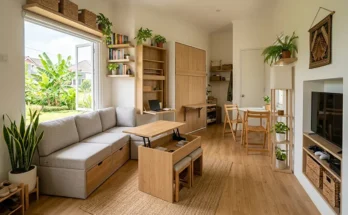
- Versatile Pieces: Invest in ottomans with hollow interiors for storing blankets and board games. Nested tables can be tucked away when you need floor space for playing, and expanded when you need an extra surface.
- Transitioning Spaces: Choose a sofa that can double as a guest bed, or use a dining table that folds down against the wall to act as a workspace during the day and a family gathering spot at night.
3. Low-Cost Aesthetic Upgrades
You don’t need a renovation to make a house look brand new. A few cosmetic tweaks can significantly change the mood.
- The Paint Effect: A fresh coat of paint is the most cost-effective way to update a home. Use light, neutral tones to make a small room feel airier, or pick one accent wall to add depth and character without overwhelming the space.
- Surface Updates: Swap out tired cabinet hardware or light switch plates for more modern, affordable versions.
- Peel-and-Stick Magic: Use peel-and-stick wallpaper to add texture or color to a small corner, a hallway, or even the back of a bookshelf. It is temporary, affordable, and easy to apply yourself.
4. Thrifting and DIY Solutions
The most expensive furniture is often the “new” kind. Your best resources are often local second-hand shops or online marketplaces.
- The Refurbish Game: A coat of paint and new handles can turn a dated dresser found at a garage sale into a stylish heirloom-quality piece.
- DIY Art: Don’t spend a fortune on wall decor. Frame your children’s artwork in consistent, inexpensive frames to create a high-end gallery look, or print family photos in black and white for a sophisticated, uniform aesthetic.
5. Lighting and Illusion
A dark, cramped room feels even smaller. Lighting design is key to making your home feel welcoming and expansive.
- Ditch the “Big Light”: Harsh overhead lighting can make rooms feel smaller. Instead, use a combination of floor lamps and table lamps to create warm, inviting pools of light at eye level.
- Mirror Strategy: Strategically placed mirrors can reflect light and create the illusion of extra depth, effectively doubling the visual space of a hallway or living room.
Maintaining the Flow: The Living Balance
Even with the best storage, a small family home can quickly become chaotic if you don’t manage the flow of traffic.
- Zoning with Rugs: Use area rugs to define specific zones (e.g., a “play zone” vs. a “lounge zone”) in an open-concept living area. This gives the room a sense of structure without needing physical walls.
- Curtains as Dividers: If you need to separate a bedroom or a home office from the main living area, tension-rod curtains are a simple, inexpensive way to provide privacy or hide clutter, and they can be pulled back in seconds to open the room back up.
Function is the Ultimate Beauty
It is easy to get caught up in the “perfect” home images on social media, but remember that the true goal of your home is to serve the people who live in it. A beautiful family home is defined by how well it functions for your daily life, not by its square footage or the cost of the furniture inside. By focusing on smart, budget-friendly storage, versatile furniture, and personal touches, you can create a home that is small in size but truly grand in the way it supports your family’s happiness.