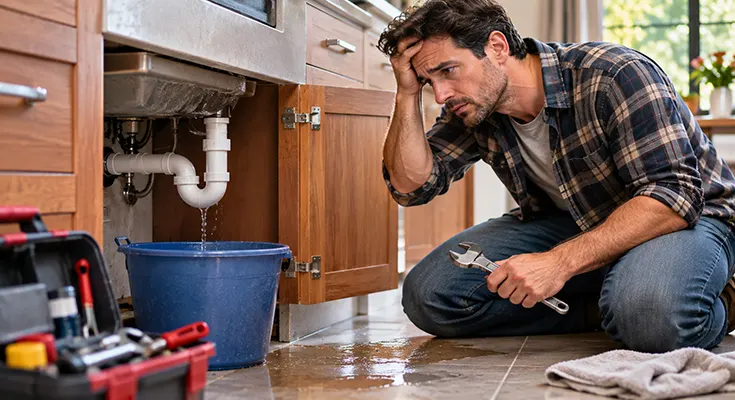
Many homeowners reach for tools at the first sign of a drip or clog, hoping to save time and money. Simple fixes can feel manageable with online videos and basic supplies from a hardware store.
Yet certain plumbing tasks carry hidden risks that turn a minor issue into a larger repair. When the job goes sideways, calling a plumber in Ballwin, MO often becomes the more practical next step rather than continuing to experiment.
1. Over-Tightening Fittings and Connections
It feels natural to crank fittings until they will not move any farther. The result is often cracked plastic nuts, stripped threads, or deformed washers. Supply lines under sinks and toilets are especially vulnerable. A connection that looks solid can develop a slow leak that soaks cabinetry or flooring before anyone notices. Hand-tight plus a modest additional turn is usually enough. Going further creates the very problem the repair was meant to stop.
2. Pouring Chemical Drain Cleaners Down the Drain
Chemical cleaners promise quick results. In reality they can generate heat that softens or cracks older pipes, especially in homes with mixed materials. Repeated use leaves residual damage that weakens joints over time. The original clog may return, now compounded by pipe deterioration that requires more extensive clearing or replacement. Mechanical methods or professional equipment avoid the corrosive side effects.
3. Replacing a Toilet Wax Ring or Setting a New Toilet
A new wax ring seems straightforward, yet alignment matters. If the toilet is not perfectly level and seated, the seal fails and water seeps under the base. That moisture can damage the subfloor long before stains appear. Over-tightening the closet bolts can crack the porcelain base itself. Getting the flange height and ring placement right the first time prevents a far larger floor repair later.
4. Attempting Pipe Repairs with Mismatched Materials
Mixing copper with galvanized steel without a proper dielectric union invites galvanic corrosion. Using the wrong cement on PVC or CPVC produces joints that look fine initially but fail under pressure. Temporary clamps or tape over a pinhole often hide the true extent of the problem until a bigger section needs replacement. Matching materials and using correct transition fittings keep the system intact.
5. Disassembling Faucet Cartridges Without Full Isolation
Faucets with ceramic discs or complex cartridges can seize or break when forced. Debris from mineral buildup may lodge deeper inside the valve body during the process. If the water is not fully shut off and residual pressure remains, the result is an unexpected flood under the sink. Reassembly with the wrong O-rings or orientation leaves the faucet dripping worse than before.
6. Adjusting or Replacing Water Heater Components
Thermostats, heating elements, and anode rods sit inside a pressurized tank. Incorrect temperature settings waste energy or create scald risks. Working on an electric unit without locking out power introduces electrical hazards. A gas water heater involves venting and combustion concerns that are easy to overlook. Small adjustments can leave the unit leaking at fittings or operating inefficiently until a full service call is required.
7. Improper Slope on Drain Lines or Vent Work
Drain pipes need a consistent downward pitch so water and solids move freely. Flat or reverse-sloped sections create standing water, recurring clogs, and eventual joint failures inside walls or floors. Adding or modifying vents without understanding the system can cause slow drains and sewer gas odors. Correcting these errors later means opening finished surfaces, which multiplies the original cost.
When to Pause and Consider Professional Help
A few practical checkpoints help decide whether to continue or stop:
- The problem returns within days of a DIY fix
- You cannot fully shut off water or identify every shutoff valve involved
- The work requires opening walls, floors, or ceilings
- Materials or fittings do not match what is already in the house
- Local code or permit requirements apply to the repair
These situations often signal that specialized tools, diagnostic experience, or code knowledge will prevent further damage.
Final Thoughts
DIY plumbing can handle minor tasks when the steps are clear and the system is simple. The seven repairs above show how easily small errors expand into water damage, material replacement, or repeated service calls.
Knowing the limits of a weekend project protects both the house and the budget. For complex or recurring issues, working with a plumber in Ballwin, MO remains the most reliable way to resolve the problem correctly the first time.